









Top Articles
Insights That Support Clear Marketing Decisions
Our blog shares practical perspectives on digital marketing, SEO, automation, AI-driven search, and business growth. Everything here is written to help teams understand what matters, why it matters, and how to apply it without confusion.
Latest Articles
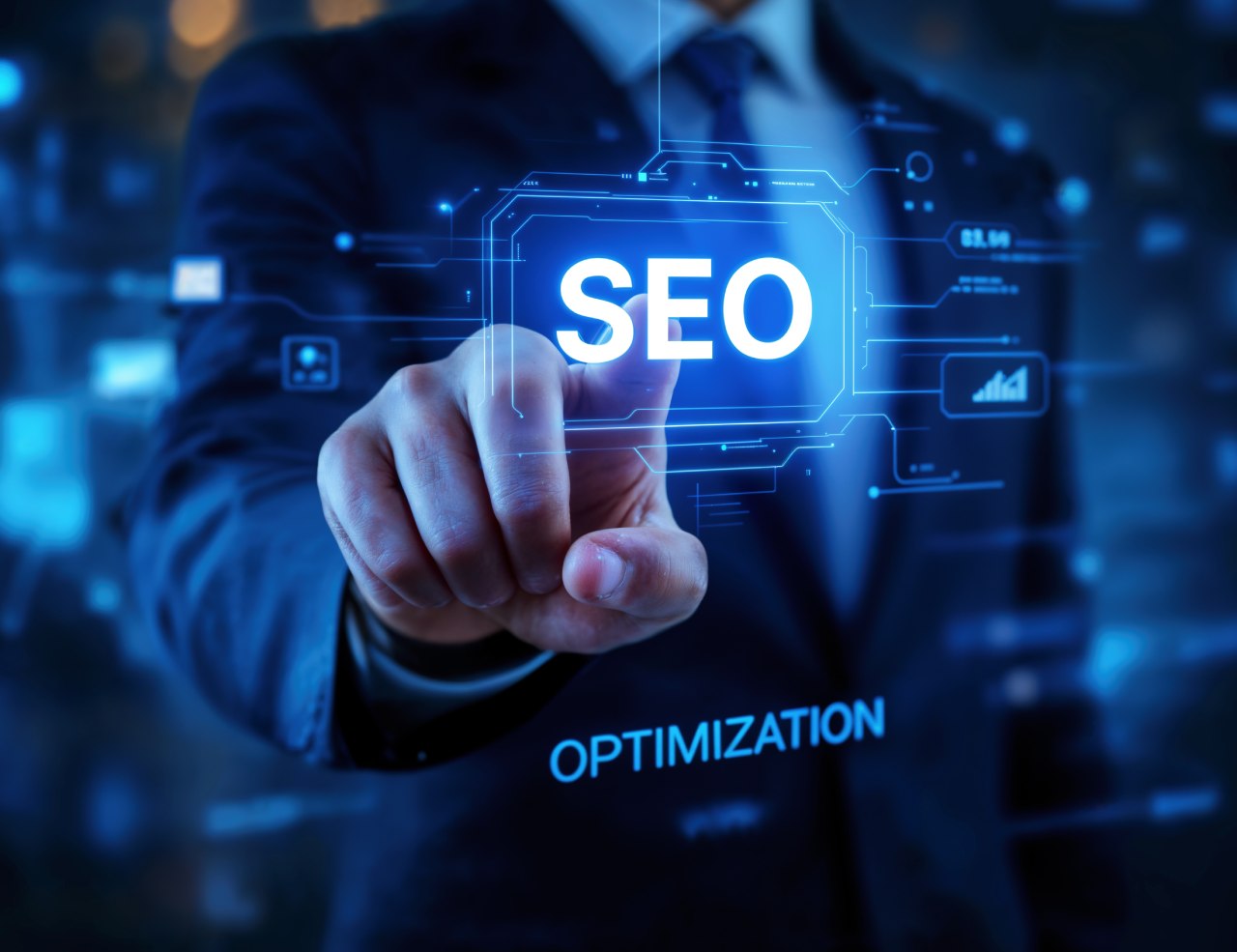
Complete Agentic SEO Guide: How AI Agents Transform Search
SEO is not disappearing. It’s developing fast.
For years, search success meant understanding algorithms, improving rankings, and earning visibility through keywords and backlinks. But the way people access information is changing. AI agents are now stepping into the search process, interpreting queries, gathering insights, and generating answers directly.
This shift is not small. It’s structural.
If your strategy still revolves only around ranking on a search results page, you may already be falling behind. This guide explains how AI agents are transforming SEO, what agentic SEO really means in practice, and how to adapt before your visibility begins to shrink.
The Shift from Ranking-Based SEO to Agentic SEO
Traditional SEO was built around rankings. You optimized a page, earned authority signals, and aimed to secure a spot near the top of search results.
Agentic SEO operates differently.
AI-driven systems now interpret search queries with deeper intent. Instead of presenting a list of links, they generate summarized answers by analyzing multiple sources. Your page may contribute to the final response, or it may be ignored entirely.
From Blue Links to AI-Generated Answers
Search is becoming answer-based.
When someone asks a complex question, AI agents do not simply match keywords. They analyze context, evaluate different sources, and produce a synthesized response. That means your content must be structured in a way that allows it to be extracted and understood easily.
Ranking alone no longer guarantees visibility. Extractability does.
From Keyword Matching to Intent Interpretation
Agentic AI systems interpret meaning, not just phrases.
A search like “best CRM for scaling startups” is not treated as a simple keyword string. The AI understands the user may be comparing pricing tiers, scalability, integrations, and long-term value. It breaks the request into smaller tasks and gathers relevant information accordingly.
This shift demands a new approach: search agent optimization. You are no longer optimizing just for algorithms. You are optimizing for intelligent systems that evaluate context.
How AI Agents Are Transforming SEO Mechanics
The transformation is happening at the structural level of how search works.
Multi-Source Analysis Instead of Single-Page Ranking
AI agents do not rely on one article. They retrieve insights from multiple sources, compare them, and filter out weak or inconsistent information.
If your content lacks depth or clarity, it won’t survive comparison.
Agentic SEO requires comprehensive coverage of topics. Surface-level blog posts that once ranked well may now be bypassed if they do not add real value during multi-source analysis.
Extractability Over Clickability
Traditional SEO focused heavily on click-through rates and ranking positions. While those still matter, agentic systems prioritize content that can be extracted and synthesized.
This is where structured formatting becomes critical. A clear H1, H2, and H3 hierarchy allows AI systems to identify context boundaries. Well-developed sections make it easier to extract meaningful insights.
When you optimize structured content for agentic search systems, you increase your chances of being included in AI-generated responses.
Context Depth Over Keyword Density
Keyword stuffing was already outdated. In the agentic era, it is ineffective.
Agentic AI evaluates topical authority. It looks for context-rich explanations that fully explore a subject. If your content only mentions “agentic SEO” without thoroughly explaining how agentic AI performs web searches or how search agent optimization works, it loses credibility.
Depth signals expertise. Superficial repetition signals weakness.
Trust and Validation as Core Signals
AI agents cross-reference information. They assess consistency across sources. They look for logical structure and reliable claims.
Trust is becoming central to visibility.
If your content lacks clarity, supporting logic, or topical alignment, AI systems will prioritize stronger sources.
How Agentic AI Searches the Web, And Why It Changes Strategy
To adapt properly, you need to understand how agentic AI searches the web.
Intent Mapping and Query Deconstruction
Agentic systems begin by interpreting the user’s deeper objective. They break complex searches into subtasks. For example, a query about “AI SEO strategy for SaaS companies” may involve technical SEO, content structure, tools, and long-term scalability.
The AI maps out these components before retrieving information.
Your content must address these layers clearly.
Cross-Referencing and Validation
Agentic AI performs web searches by gathering information from multiple relevant sources. It compares definitions, examples, and recommendations.
Thin content that barely scratches the surface is quickly filtered out.
This is why agentic SEO demands substance. If your page cannot hold up during cross-reference analysis, it won’t influence the final synthesized answer.
Structured Content Extraction
This is where many websites fail.
When AI systems analyze a page, they rely on structure to understand meaning. Clear sections, defined headings, and logical flow make it easier to interpret content accurately.
If you want to optimize structured content for agentic search systems, focus on clarity over clever phrasing. Organize ideas so each section answers a distinct part of the topic.
Synthesized Output Instead of Link Lists
The final stage of agentic search is synthesis.
Instead of delivering ten links, AI systems generate a summarized output. Your visibility depends on whether your content was strong enough to contribute to that output.
This is a fundamental transformation in SEO.
What Businesses Must Change to Avoid Falling Behind
Adapting to agentic SEO requires intentional changes.
Rethinking Content Strategy
Content should no longer be created just to target isolated keywords. It should be developed around comprehensive topics.
Each article should fully address the subject, anticipate related questions, and provide clear, structured explanations.
Aligning Technical SEO with AI Retrieval
Technical SEO still matters. Clean site architecture, semantic markup, and structured data support AI interpretation.
When combined with a strong content structure, technical optimization enhances extractability.
Leveraging AI in SEO Tools
AI in SEO tools can help identify intent gaps, semantic clusters, and content opportunities. These tools are valuable for research and analysis.
However, tools are not a strategy. They support execution, but thoughtful planning ensures your content aligns with how agentic systems retrieve and synthesize information.
When to Consider an AI SEO Service
As AI-driven search becomes more complex, working with a specialized ai seo service can provide strategic clarity.
An experienced provider understands how agentic AI performs web searches, how to structure content for extraction, and how to build long-term authority in AI-generated environments.
The Competitive Advantage of Early Adoption
The brands that adapt first gain a disproportionate advantage.
As agentic search becomes more common, AI systems will increasingly determine which sources shape user decisions. If your content is structured, authoritative, and strategically aligned, it can become a consistent contributor to AI-generated answers.
If not, you risk fading from visibility even if you once ranked well.
Agentic SEO is not a temporary shift. It represents the next phase of search evolution.
FAQs
What is agentic SEO?
Agentic SEO is the practice of optimizing content so AI agents can interpret, extract, and synthesize it when generating search responses.
How does agentic AI perform web searches?
Agentic AI interprets intent, gathers insights from multiple sources, validates information, extracts structured content, and generates summarized outputs instead of simple link lists.
How is agentic SEO different from traditional SEO?
Traditional SEO focuses on rankings and keywords. Agentic SEO focuses on extractability, context depth, and structured content that AI systems can understand and trust.
How can I optimize structured content for agentic search systems?
Use clear heading hierarchy, provide comprehensive coverage of topics, integrate keywords naturally, and maintain logical flow throughout the article.
Do businesses need an AI SEO service now?
As AI-driven search grows, an experienced ai seo service can help ensure your strategy aligns with how agentic systems evaluate and surface content.
Conclusion
AI agents are transforming SEO from a ranking game into an intelligence-driven visibility model. If your content is not structured for interpretation, validation, and synthesis, it will struggle in this new environment.
Don’t fall behind, let Zulfi Tech’s AI SEO service position your brand at the forefront of agentic search today.

Book a Consultation
Have a Topic in Mind?
If there’s a subject you’d like us to cover, feel free to reach out. We’re always open to questions that help businesses think more clearly about marketing.

AI-powered digital marketing solutions for businesses ready to dominate search and AI-driven discovery.


Copyright© 2026 Zulfi Technologies. All rights reserved.