








Blogs > What is On-Page SEO and Off-Page SEO?
What is On-Page SEO and Off-Page SEO? What They Really Mean in 2026
Published: July 10, 2026

F. Zulfiqar
CEO Zulfi.tech


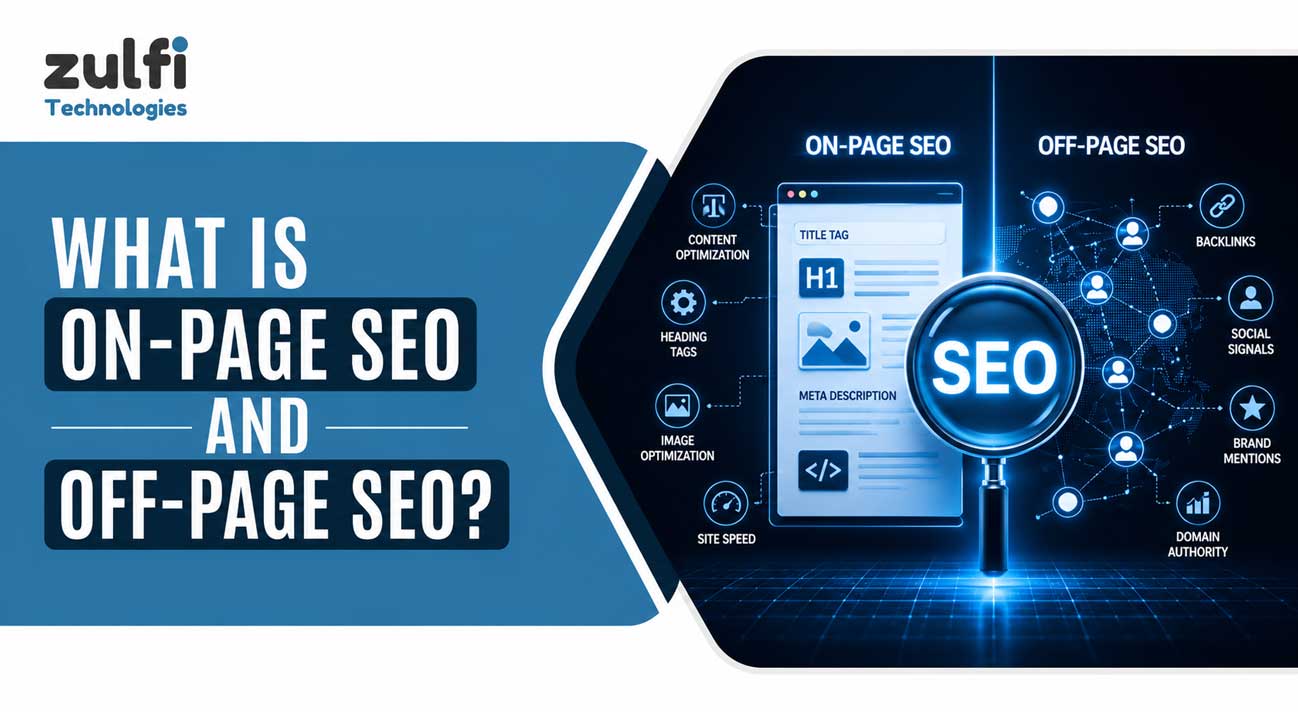

If you’ve ever wondered why some websites dominate Google search results while others barely get noticed, the answer almost always comes down to SEO, specifically on-page SEO and off-page SEO. These two pillars of search engine optimization are the backbone of any successful digital strategy.
Think of your website like a house. On-page SEO is everything you do to make your home clean, organized, and welcoming. Off-page SEO is how your neighbors talk about you, your reputation, and influence beyond your own walls. Both are essential if you want your website to be visible, trusted, and clicked on in 2026.
In this guide, we’ll break down what on-page and off-page SEO really mean, why they matter, and how you can optimize both to boost your website’s rankings.
What is On-Page SEO?
On-page SEO refers to the optimizations you make within your website to improve its visibility and relevance in search engines. It’s about helping both users and search engines understand your content clearly and efficiently.
In today’s digital landscape, Google prioritizes websites that are valuable, easy to navigate, fast, and mobile-friendly. On-page SEO ensures your website meets all these criteria while communicating exactly what your content is about.
Key Components of On-Page SEO:
01. High-Quality Content
Content is still king, but not just any content. It needs to answer real questions, provide insights, and be well-structured.
Pages optimized with SEO content optimization techniques, like using headings, clear sentences, and naturally integrated keywords, help Google understand your topic and show your site to the right audience.
02. Titles, Meta Descriptions, and Headings
Your titles and meta descriptions are the first impression users get on Google.
Clear, compelling titles with keywords like on-page and off-page search engine optimization or on-page and off-page SEO make your pages easier to index and increase click-through rates.
03. Website Structure and URLs
Logical URLs and internal linking make it easy for both users and search engines to navigate your site.
For example, a URL like www.example.com/seo-tips/on-page is far clearer than www.example.com/page?id=123.
04. Mobile Optimization and Page Speed
More than half of all web traffic comes from mobile devices, and Google prioritizes fast-loading, responsive sites.
On-page SEO includes optimizing images, reducing code bloat, and choosing fast hosting to create a smooth experience.
05. Images and Multimedia
Images, videos, and infographics can make your content more engaging.
Optimizing them with descriptive file names, alt text, and proper sizes ensures they support your SEO rather than slowing your site down.
On-page SEO is all about making your website a clear, credible, and user-friendly destination that search engines want to show to users. Without a strong on-page foundation, even the best off-page strategies may struggle to perform.
What is Off-Page SEO?
While on-page SEO focuses on your website, off-page SEO focuses on your website’s reputation and authority across the internet. It’s how the digital world perceives your site and signals to search engines that your content is trustworthy, relevant, and valuable.
Think of off-page SEO as the “word-of-mouth marketing” of the internet. If respected websites link to you, social media shares boost your visibility, and people talk about your brand online, Google takes notice.
Key Components of Off-Page SEO:
High-Quality Backlinks
Backlinks are links from other websites pointing to yours, acting as “votes of confidence” in your content.
Quality matters more than quantity; links from authoritative, relevant sites carry more weight than dozens of low-quality links.Social Signals and Mentions
Engagement on platforms like LinkedIn, Twitter, or industry forums can indirectly improve rankings.
While social shares aren’t a direct ranking factor, they increase visibility, drive traffic, and signal relevance.Guest Blogging and Partnerships
Contributing valuable content to other websites or collaborating with industry influencers builds credibility.
It also generates backlinks, positioning your website as an authority in your niche.Brand Mentions and Reviews
Positive mentions and reviews on reputable platforms enhance your site’s trustworthiness.
Google considers these when evaluating your domain’s authority and reliability.Community Engagement
Active participation in forums, Q&A sites, and niche communities helps build recognition and trust.
Engaged communities are more likely to share your content and link to your site organically.
Off-page SEO is about proving your website’s credibility to the world. Even a perfectly optimized on-page site won’t rank high if Google doesn’t trust it, so building authority is essential.
How On-Page and Off-Page SEO Work Together
On-Page SEO: Optimizes your website for clarity, user experience, and content relevance.
Off-Page SEO: Builds authority, trust, and reputation in the broader digital ecosystem.
Both are essential. A well-structured, fast, and informative site without strong backlinks may remain invisible. Conversely, a highly authoritative website with poor user experience will struggle to convert visitors or rank competitively.
Think of them as two sides of the same coin: on-page SEO tells search engines what you offer, and off-page SEO tells them why you matter.
We help businesses earn trust across search, content, automation, and AI experiences. Our focus stays practical, clear, and accountable, so progress remains visible and performance improves steadily over time.
Custom App Development
We help businesses earn trust across search, content, automation, and AI experiences. Our focus stays practical, clear, and accountable, so progress remains visible and performance improves steadily over time.
Custom App Development
FAQs About On-Page and Off-Page SEO
Q: Can I focus only on on-page SEO?
A: On-page SEO helps Google understand your site, but without off-page signals like backlinks and mentions, your site won’t rank competitively. Both are essential.
Q: How long does it take to see SEO results?
A: SEO is a long-term strategy. Typically, results appear in 3–6 months, though improvements like page speed or meta optimizations can have faster effects.
Q: What’s the most common SEO mistake?
A: Many websites focus too much on keywords or backlinks while neglecting user experience. Google now rewards sites that visitors engage with and enjoy.
Q: Are social shares important for SEO?
A: Indirectly, yes. Social shares can increase visibility, traffic, and engagement, which helps Google see your content as relevant.
Q: What’s the difference between SEO content optimization and regular content creation?
A: SEO content optimization ensures your content is structured, keyword-informed, aligned with user intent, and discoverable, while regular content might not consider these factors.
Book a Consultation
Make SEO Your Competitive Advantage in 2026
SEO is no longer about gaming Google; it’s about clarity, credibility, and consistency.
On-page SEO ensures your website communicates effectively, looks professional, and delivers real value to visitors.
Off-page SEO proves your website’s authority, trustworthiness, and relevance in the wider web ecosystem.
Focus on both, and your website won’t just appear in search results, it will become a destination people trust, engage with, and return to, boosting your traffic, authority, and business success in 2026.

About author
I am a passionate writer with a strong interest in IT and marketing, focused on sharing practical ideas in simple and clear language. I enjoy helping readers understand technology and marketing concepts easily, making them useful for everyday work and growth.



Let's Connect With Our Experts
Book a Consultation
Speed Is a Ranking Strategy.
Treat It Like One.
Site speed is often treated as a technical housekeeping task. Something to sort out, tick off, and move past. That framing misses what's actually at stake.
Page speed runs through almost every signal Google uses to evaluate a page, how efficiently it's crawled, how users engage with it, and how it scores on the metrics built directly into the ranking algorithm.
The fastest-loading websites didn't get there by accident. They got there by treating speed as a core part of their SEO strategy, not an afterthought. In 2026, that's the standard worth holding yourself to.

AI-powered digital marketing solutions for businesses ready to dominate search and AI-driven discovery.
Copyright© 2026 Zulfi Technologies. All rights reserved.